
EIOS Newsletter
September 2025

Dear EIOS community member,
We are excited to bring you the latest updates from the Epidemic Intelligence from Open Sources (EIOS) initiative, with a special focus on the upcoming launch of the EIOS system v.2.0. This edition highlights how the new system, along with innovative AI-powered tools and community achievements, is helping us advance public health intelligence (PHI) and strengthen collaboration worldwide.
The launch of EIOS v.2. is more than a technical upgrade. It represents a new chapter in shaping how we work together as a community, drive innovation, and strengthen our collective response to health threats. With EIOS v.2.0, we are stepping into a future that is more connected, adaptable, and inclusive—and we are thrilled to take this journey with you.
Coming soon: Launch of EIOS v.2.0
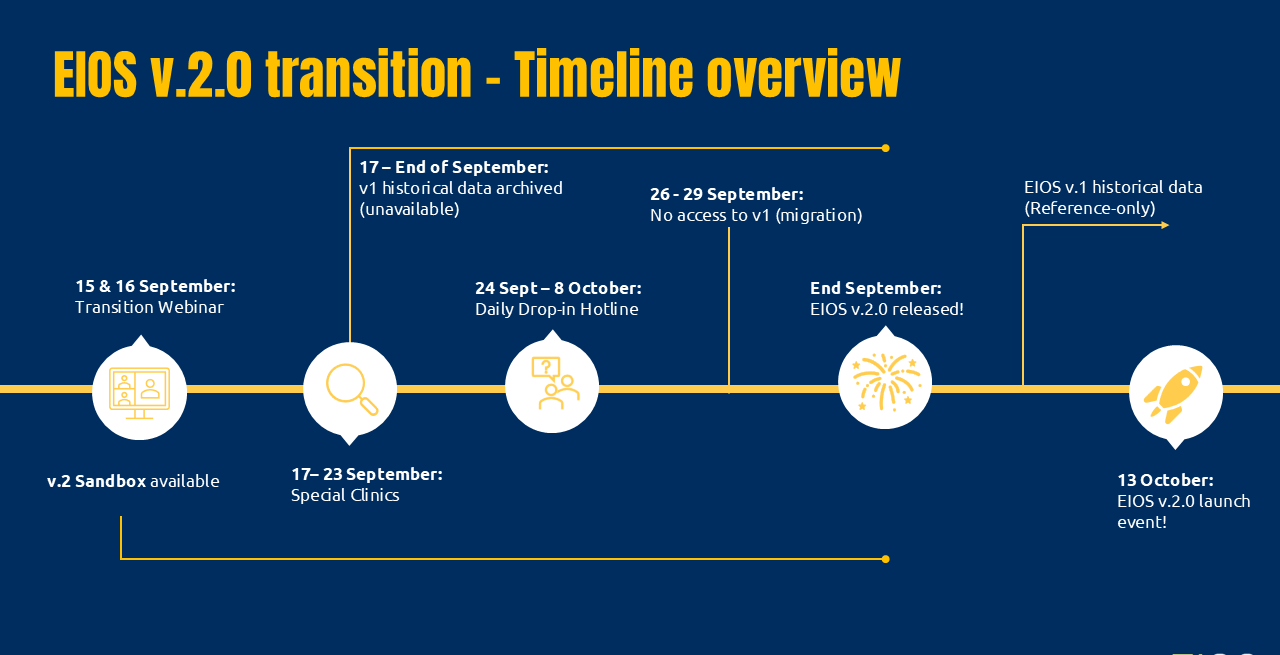
The countdown has begun: The new and improved EIOS system v.2.0 will go live at the end of September! At that time, all users will be transitioned from the current platform to the new version, which will feature a refreshed design and enhanced functionalities.
To support a smooth transition, a comprehensive package of preparatory activities has been rolled out in the weeks leading up to the launch. We encourage all EIOS system users to attend the following events to familiarize themselves with the upcoming changes:
📺 Transition Webinars (took place 15–16 September): These sessions introduced system updates, key changes, and the transition process and were facilitated in English, Arabic, French, Spanish and Portuguese. You can access the session recordings here.
🔬 Sandbox Environment (available since 15 September): An early-access space to explore and test-drive v.2.0 features and functionality before the future release.
🧩 Special Clinics (17–23 September): One-hour sessions providing in-depth demonstrations of specific features in the system, including board creation, category filters, and communication posts.
☎️ Daily Drop-in Hotline (24 September–8 October): A virtual space on MS Teams for live Q&A, guidance, and troubleshooting.
📖 New Online User Guide & Help Desk: A step-by-step online guide, pre-transition checklists, and dedicated support for questions, bug reports, and improvement requests.
🎉 EIOS v.2.0 Launch Event: The official launch event will take place at the WHO Hub for Pandemic and Epidemic Intelligence in Berlin on 13 October, alongside the World Health Summit 2025. The event will be live-streamed, and everyone is warmly welcome to join us virtually.
Additional details, schedules, and links will follow in upcoming communications and will be made available on the new User Help site.
Important reminder for EIOS system users:
17 – 26 September you can continue your work in the current EIOS system (version 1) using data from the previous three months, i.e. July, August, September 2025.
26 – 28 September the EIOS system will become temporarily unavailable as part of migrating data from version 1 to version 2.0.
29 September version 2.0 will be officially released, and version 1 will be available again in reference-only mode. This means that you can refer back to it, but should not be using it for your daily operations, as your activities will not be saved or synched to version 2.0.
Updates from the EIOS community
Strengthening regional EIOS use through AI-based text-classifier
The WHO Regional Office for Africa (AFRO) has developed a custom browser extension for AFRO which automatically distinguishes potential public-health alerts from non-relevant content and highlights these articles in the EIOS portal, helping analysts swiftly spot emerging threats amid overwhelming information flows. This AI-driven innovation enhances the speed and accuracy of detection, reinforcing EIOS’ role as a frontline tool in epidemic intelligence. Improving signal-to-noise efficiency, it empowers earlier, evidence-based public health responses across the Africa region. Discover more on this and other exciting regional developments in the EIOS AFRO Newsletter here.
Assessing EIOS effectiveness in Korea
In 2023, the Korea Disease Control and Prevention Agency (KDCA) strengthened its event-based surveillance by routinely using the EIOS system. From June to October 2023, KDCA screened nearly 100,000 media articles, detecting 425 events, most frequently dengue fever and mpox. Importantly, eight events were identified through EIOS an average of 20 days before official postings, underscoring its value for early detection of health threats. This assessment highlights EIOS’s efficiency in national surveillance while emphasizing the need for expanded sources, multilingual coverage, and continued international collaboration to strengthen global PHI. Learn more by reading the full article here.
Establishing a regional Public Health Intelligence community in South-East Asia
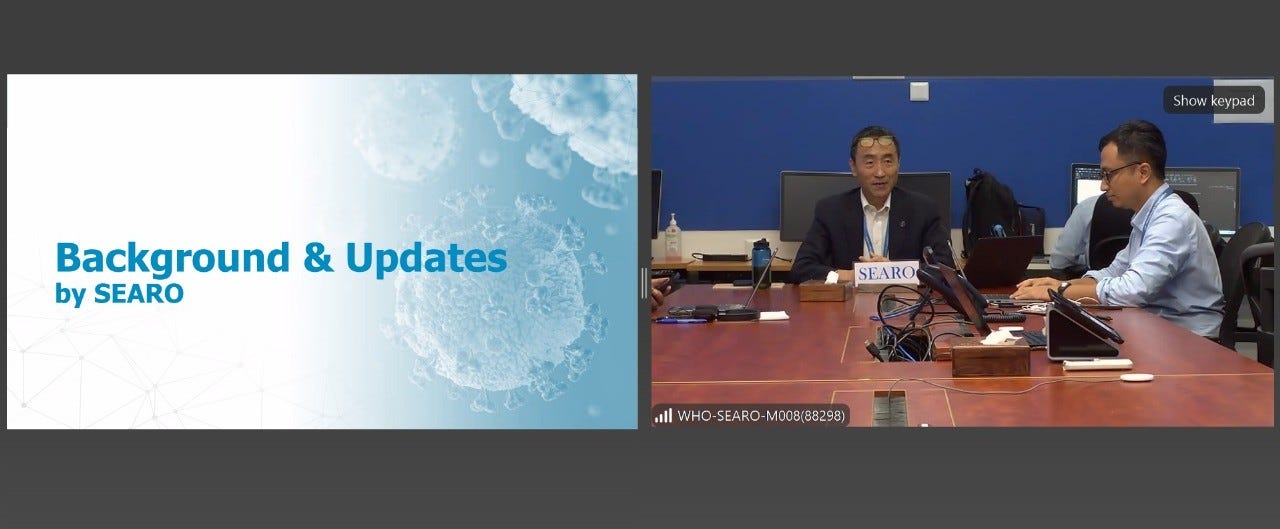
The WHO Regional Office for South-East Asia (SEARO) kicked off its regional Community of Practice for PHI with a launch webinar on 6 August 2025, drawing nearly 80 participants from across the Region. The session featured updates on the EIOS initiative and PHI capacity-building efforts.
The proposed community aims to strengthen PHI through collaboration, peer learning, and innovation. Its objectives include strengthening PHI capacity, sharing tools and best practices, and promoting continuous learning to stay up to date with evolving PHI practices.
Breakout discussions allowed participants to share expectations and shape the community’s future direction. This initiative aligns with the Region’s strategic action framework for strengthening surveillance, risk assessment and field epidemiology for health security threats, which calls for stronger collaborative intelligence to inform timely public health decision-making.
COMMUNITY CLOSE-UP:
Name of Community: Samaritan's Purse
Active on EIOS since: March 2024
Number of members: 4
How many different entities are represented in your community?
All members of our community are from Samaritan's Purse. We are an international relief and humanitarian organization that provides emergency aid, medical assistance, and long-term recovery support to people affected by crises and disasters worldwide.
What do you use EIOS for?
We use the EIOS system to support global surveillance of infectious diseases and disasters that may impact our programs worldwide. This monitoring allows us to anticipate risks, identify opportunities for emergency response, and adapt our strategies as needed. The insights gained through EIOS also inform our country office programming and play a vital role in safeguarding our staff, ensuring they can continue serving beneficiaries effectively and without disruption.
What do you like best about EIOS?
EIOS has significantly enhanced our ability to conduct global surveillance and provide timely, relevant information to our teams and country offices. By consolidating a wide range of sources into one platform, the EIOS system enables us to streamline research, reduce noise, and focus on delivering high-quality surveillance. The system not only gives us a comprehensive view of global infectious disease activity but also allows us to filter for specific countries, or even provinces, when more targeted information is required. The result is a more efficient, precise, and impactful approach to supporting our teams worldwide and responding to infectious disease risks without delay. The EIOS Core Team has been an invaluable resource helping us refine our boards to make sure we are getting the most effective use of the system for our needs.