
EIOS Newsletter
November 2025

Dear EIOS community member,
As we continue to advance global health security, we are thrilled to bring you the latest updates from the EIOS initiative. From the official launch of the EIOS system version 2.0 (v.2.0) to regional workshops and community highlights, this edition showcases the incredible progress being made in strengthening public health intelligence (PHI) worldwide. We hope these updates inspire continued collaboration and innovation within our growing community.
EIOS v.2.0: A new era for global Public Health Intelligence
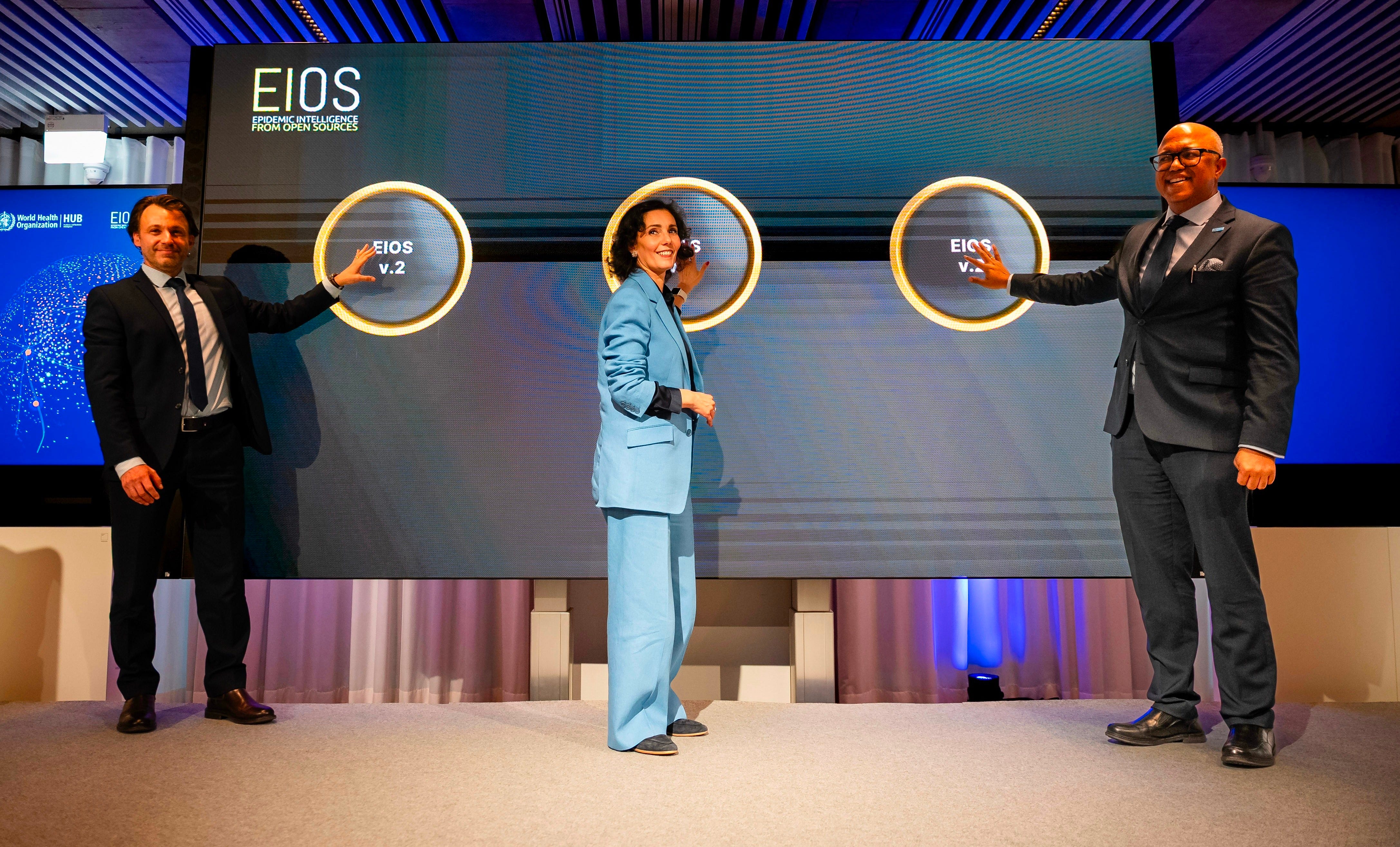
We have successfully launched EIOS v.2.0, marking a major milestone in the history of the EIOS initiative! Developed in collaboration with the European Commission’s Joint Research Centre (JRC) and our vendor Adappt.ai, this upgraded version integrates artificial intelligence, new data sources, and a more intuitive multilingual interface to strengthen early detection and response to public health threats worldwide.
While the new version was released to users at the end of September, the official launch took place during the NextGen Intelligence event at the WHO Hub for Pandemic and Epidemic Intelligence in Berlin on 13 October 2025. Speaking at the event, Dr Chikwe Ihekweazu, Executive Director of WHO’s Health Emergencies Programme, described EIOS v.2 as “a bridge to the future: more open, more agile and more inclusive.”
Learn more about the launch in the full WHO press release and hear reflections from the EIOS Community in our new video, Voices from the Community.
What’s next?
With the official launch of EIOS system v.2.0, all users have gained full access to the new system, historical data is in place, new articles are flowing in, and user actions are saved. EIOS v.1 has since been put in reference-only mode, meaning user activities like pinning or flagging are no longer stored. Therefore, ongoing PHI work should only be executed in EIOS v.2. By the end of the year, v.1 will be fully retired and no longer accessible.
Developments, improvements and bug fixes are being implemented and attentive system users might have noted that new updates have since been released. While most updates happen quietly on the backend, the next major change will require active community collaboration: the introduction of a unified category tree across all EIOS communities. This key step will harmonize access to information and further facilitate cross-community collaboration.
As the EIOS system continues to evolve, we invite users to consult the new and improved User Guide for any questions around system functionality, and to share their feedback, requests, and report any issues directly through the new Help Desk, available in the system.
Strengthening Public Health Intelligence in the Eastern Mediterranean Region
The 2025 PHI Regional Engagement meeting took place in Cairo, Egypt, during 15-16 September 2025. It was jointly organized by the WHO Hub for Pandemic and Epidemic Intelligence, the WHO Eastern Mediterranean Regional Office, and the Robert Koch Institute. The meeting brought together Member States, WHO Country Offices, and partners to advance PHI as a core public health function across the WHO Eastern Mediterranean Region.
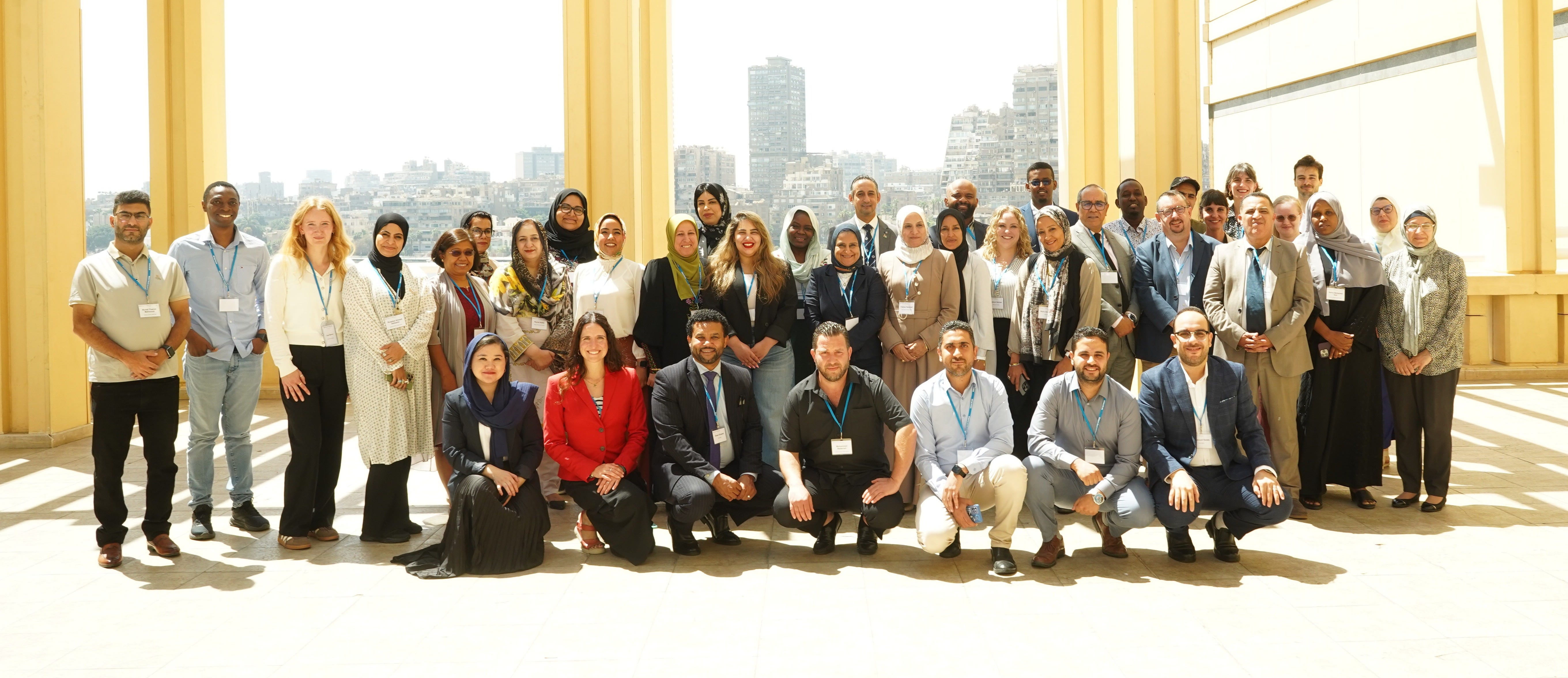
Discussions focused on strengthening PHI capacities through initiatives, including EIOS, the PHI Competency Framework and Curriculum, and the PHI Capacity Building and Innovation Project. Participants also explored regional approaches to event-based and integrated disease surveillance, and co-created ideas for a PHI Community of Practice to sustain collaboration and knowledge exchange. The meeting marked a milestone in building a connected and resilient PHI ecosystem in the region.
Strengthening PHI collaboration across the Western Pacific: Insights from the Suzhou workshop
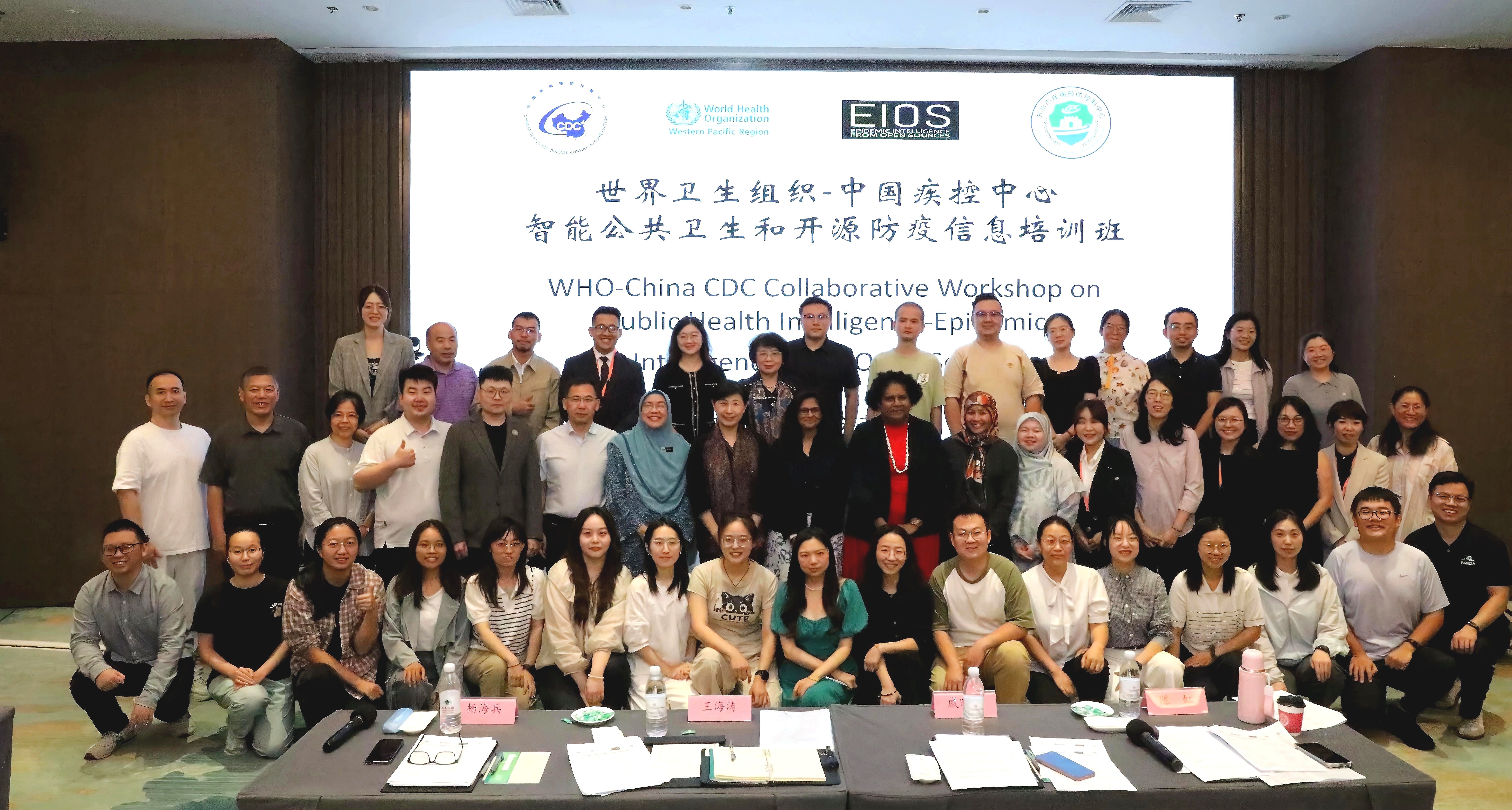
The recent EIOS–PHI workshop in Suzhou, China, held from 23–26 September 2025, brought together 49 participants from across the Western Pacific to strengthen collaboration on PHI in the region. Next to a range of different level representatives from Chinese institutions, such as China CDC, Global Public Health Bases and the Suzhou Information Center, participants included members from nine different EIOS communities in the region, namely Brunei Darussalam, Indonesia, Japan, Malaysia, Mongolia, Philippines, Republic of Korea, Singapore, and Viet Nam. Participants exchanged experiences in leveraging the EIOS system and explored PHI practices, including risk assessments and the 7-1-7 target.
Key outcomes included an agreement to share boards across communities using EIOS v.2 and plans to organize a second virtual Community of Practice meeting, focused on participant-driven topics. The workshop highlighted the value of cross-country collaboration and the potential for technical partnerships, particularly in AI and digital tools, to further enhance EIOS capabilities. It also reinforced momentum for regional PHI innovation and deepened cooperation between WHO and China CDC.
COMMUNITY CLOSE-UP:
Name of Community: Ghana
Active on EIOS since: June 2023
Number of members: 50+
How many different entities are represented in your community?
The Ghana EIOS community brings together members from the Ghana Health Service under the Ministry of Health (MoH), the Veterinary Services Directorate under the Ministry of Food and Agriculture, the Environmental Protection Agency, the National Disaster Management Organisation and the WHO Country Office. The recent onboarding of the Food and Drugs Authority, also under the MoH, has further expanded the community’s scope and strengthened multisectoral collaboration for event-based surveillance (EBS).
What do you use EIOS for?
The community uses the EIOS system to perform media scanning as part of EBS and for early detection of public health threats, including outbreaks, foodborne illnesses, product safety alerts, and zoonotic diseases. Members collaborate to monitor, verify, and share signals from open sources to inform timely national response actions.
What do you like best about EIOS?
Ghana’s EIOS system users value the platform’s ability to connect multiple sectors, improve situational awareness, and promote proactive, data-driven public health preparedness. The new features and improvements of EIOS v.2 hold great promise for expanding relevant local sources which will significantly enhance the platform’s relevance for PHI in Ghana.
Compiled by Dr Joshua Arthur, EIOS Focal Point, Ghana.